Seasonal Events at Tondaya
Japan has many special traditional events and festivals. Tondaya keeps
our traditions and provide those events in following ancient’s style. |
January 1 New Year at Tondaya
|
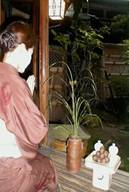
-Shinto Alter |
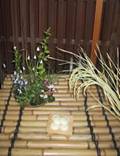
- Entrance decorations |
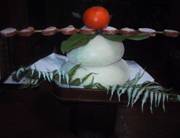
-Kagamimochi |
The New Year is the most important event in whole year. We
decorate in traditional style to welcome in the gods at the begging of
the year. Auspicious decorations welcome our guests and wish all have
a fortune year.
The unique at Tondaya is the revolving Shinto alter facing the
fortune direction of the year. It will hang from New Year Day for one
month. |
January 7th Eating Rice
Porridge
|
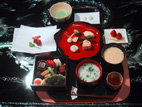
Tondaya offers the opportunity to Enjoy traditional taste of New Year. Nanakusagayu is the traditional
rice porridge with the seven herbs of the spring. We eat the porridge
on wishing for good health throughout the year. We provide Special
healthy lunch box including the rice porridge on the day (reservation needed). |
 |
January 15th Eating Read Bean Rice
Porridge & Dontoyaki
|
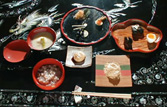
The fifteenth day of the new year is called Minor New Year, Koshougatu. It is a custom to eat red bean porridge in the morning
of the day. Also, in visiting the shrine, the New Year’s decorations
are burned to wish our health and wealth in the year; this event is
called Dontoyaki.
We provide the opportunity to taste the traditional style of rice
porridge on the day and wish for your good health throughout the
year(reservation needed). |
|
Febraury 3rd Setsu Bun
|
The Setsu Bun, the beginning of spring day, is the event that people
scatter roasted soy beans to wish out of demons and in with good luck,
also people eat the same amount of beans with your coming age
expressing the wish for good health.
We have special Kaiseki lunch and dinner menu for the day. Kaiseki-ryori is an artistic and gracious Japanese seasonal cuisine
originally served in tea ceremonies. Kaiseki-ryori uses the fresh
ingredients of the season and is cooked in ways that enhance the
original taste of the ingredients. Our healthy dishes include fresh
vegetables and beans. |
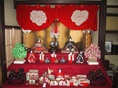
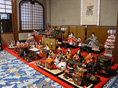
Tondaya has tons of collection of Hina Dolls which has been preserved till when the girls born in the family or the women married into the family. We display all the
collections in the guest room. The dolls are dressed in gorgeous kimono in the way of women in the ancient Heian Court.
Empress, Hina, and Emper, Dairi, sit on the top, followed by three ladies of the court,
five court musicians, an escort and a gourd. Also, Diamond –shaped rice cakes, and
sweets and white sake are displayed. |
 |
April Cherry Blossom Viewing Party
|
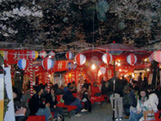
In begging of the April is the time to enjoy cherry blossom. We enjoy
drinking and eating under the beautiful trees. You will have an
opportunity to observe or enjoy crazy “Cherry Blossom Viewing Party”
in Japanese style.
|
 |
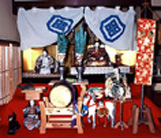
Boy’s day also called Children’s day is the day to celebrate the
health and wealth of children. We display the samurai dolls and helmet replicas.
We prepared special Bento for the day. Chimaki,
a rice dumpling wrapped in bamboo leaves and Kashiwamochi, rice
cakes sweet adzuki beans inside with wrapped in oak leaf ate the
special treat on this day.
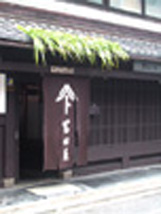
You can see another special sight only in for the day that a bunch of
Shobu, Japanese Iris, is hanged from the roof. Iris has always
associated with the Boy’s Festival because it means striving for
success in Chinese Character. Also, we enjoyed Shobu-yu , the
leaves in bath tab since the iris bath has been believed to have
medication effects, against all kinds of sickness. |
 |
June 15th ¾ June 25th‐Antique
Kimono Show
|
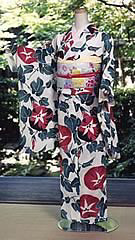 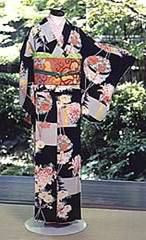 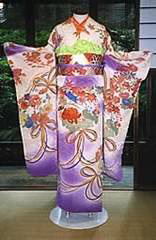 |
We display tons of antique kimono collections from Meji Period, about
120 years old. You have an opportunity to observe their wearing style
and their life style at that age. |
June ¾ September- Summer Setting
|
The summer setting appear from begging of June to the end of the
September. The curtains made of bamboo trees provide adequate
vitalization to the room. This is the wisdom to absorb coolness in the
room in the days that there are no electric devices. |

|
June 30th- Summer Purification Ritual
|
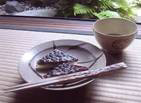
Traditional dessert, made in the shape of the ice, is served with Japanese Green Tea on the day,
in very middle of the year. We follows the custom to wish our health
for lest of the year. |
 |
July 7th - Star Festival (TANABATA)
|
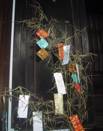
The Star Festival is driven from a Chinese legend in which
Altair and Vega, which is separated on opposite sides of Milky Way,
meet once a year on this day. You write your wishes on strips of the paper, hang them on the bamboo trees with other
decorations made by cloth and wish to give your will. |
 |
| August - Our treasured Photo Exhibition |
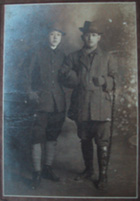 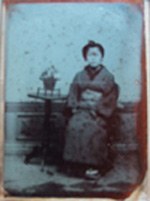 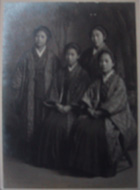 |
We have tons of treasured photo collections that depict Tondaya’s
successive owner and their family’s lifestyle. You will explore old
Japanese lifestyle from them. |
| August 13-16 Lantern Festival |
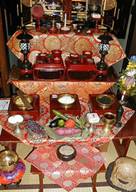
A Buddhist Event, Lantern Festival is to hold a memorial service
to the spirits of ancestors on August 13 to 16. The spirits of the
ancestor are welcomed on 13th and seen off on 16th with a bonfire. During the Bon period, vegetables and fruits are
offered at bon shelves. The spectacle event at that period in Kyoto is Gozan Okuribi held last day of lantern Festival for the purpose of sending off the spirits back to the nether world from where they have
been visiting this world since August 13.
You will have chance to see the Bon display and also offered special
lunch box, which is a vegetarian diet of soybean products, vegetables, seaweed, and rice
(reservation needed). |
|
September 9th Chrysanthemums
Festival
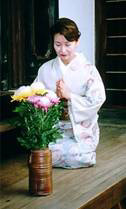
Many Japanese culture and customs have been influenced by
Chinese culture. The 9th day of the 9th lunar month is Double Ninth Festival
because nine is the positive number in Chinese way. And the
Double Ninth Festival is also a time when chrysanthemum blooms. Chrysanthemums have been respected as the imperial emblem and
also admired as the symbol of longevity, majesty and holiness. So enjoying the flourishing chrysanthemum also becomes a key
activity on this festival.
|
 |
|
September 25th Full Moon Viewing
|
In autumn, the moon looks clear and especially beautiful in the sky.
We have a custom to enjoy viewing the full moon on Moon Viewing Night,
called Jyugo-Ya. It held at full moon someday in
September or in the beginning of October (August 15 by the lunar
calendar). We display dumplings to the moon. The the seven flowers of autumn, eulalia, and vegetables are added for
the decoration. The ingredients, shape, size of the dumplings, and the
number of the dumplings offered, depend on the region. At Tondaya, we
display the dumplings made of taros with eulalia and enjoy the moon
viewing from hole of taros that made by a chopstick. |
|
November 15th-16th Harvest Festival
|
The
day was known as Ninamesai ,the Harvest Festival, the Emperor
makes the season's first offering to the gods of freshly harvested
rice and sake (rice wine), and then partakes of them himself.
This celebration of the harvest has also observed among the private
citizen. We offered the ears of rice in front of the storehouse that
is the place for the spirit of the guardian of the house.
|
|
 |